Answer Engine Optimization
By BeeRanked · August 6, 2026 · Updated September 12, 2026
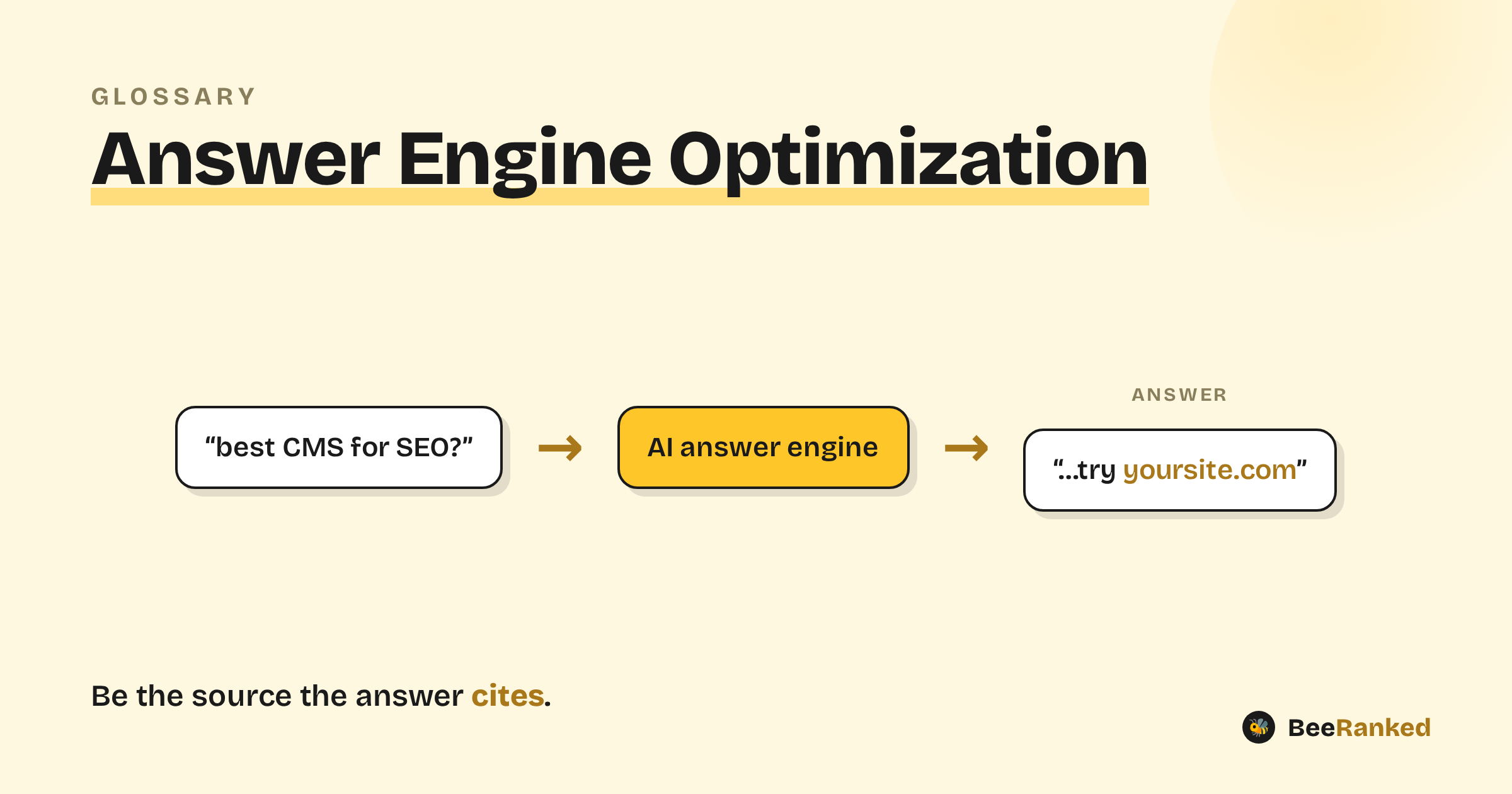
Answer Engine Optimization (AEO) is the practice of structuring your content so that answer engines, the AI systems behind tools like ChatGPT, Perplexity, and Google's AI Overviews, can read it, trust it, and quote it directly in their answers.
Why it matters
Search is shifting from a list of links to a single synthesized answer. When someone asks an assistant a question, the assistant pulls from sources it can parse and trust, then names a few of them. A page that is not machine-readable is out of the running, however well it ranks in the traditional results. Google has confirmed that its AI features show and link to supporting web pages (Google Search Central), so being one of those cited pages is the new goal. You can check whether AI search engines already mention your brand in a few minutes.
How AEO works in practice
Answer the question early and plainly. Lead with a direct, self-contained answer an engine can lift in a sentence or two.
Add structured data. Schema markup tells a machine what your page is: an article, a product, a set of FAQs.
Keep the page clean and fast. Text buried inside heavy page-builder markup is hard to parse; clean HTML and solid Core Web Vitals help.
Show your sources and expertise. Clear authorship, citations, and dates are trust signals an answer engine can weigh.
AEO vs traditional SEO
Traditional SEO optimizes for ranking a link. AEO optimizes for being the source an answer is built from. The two overlap heavily, both reward clear, structured, trustworthy content, and the winning outcome differs: a citation inside the answer instead of position one in a list. For a short walkthrough, watch AEO: getting your brand cited by AI answers.
Sources
Related terms
Generative Engine Optimization, Structured data, Zero-click search, Rich results