XML sitemap
By BeeRanked · August 13, 2026
An XML sitemap is a machine-readable file, usually at /sitemap.xml, that lists the URLs on your site you want search engines to know about, along with details like when each was last modified. It is a discovery aid: an invitation, not a command.
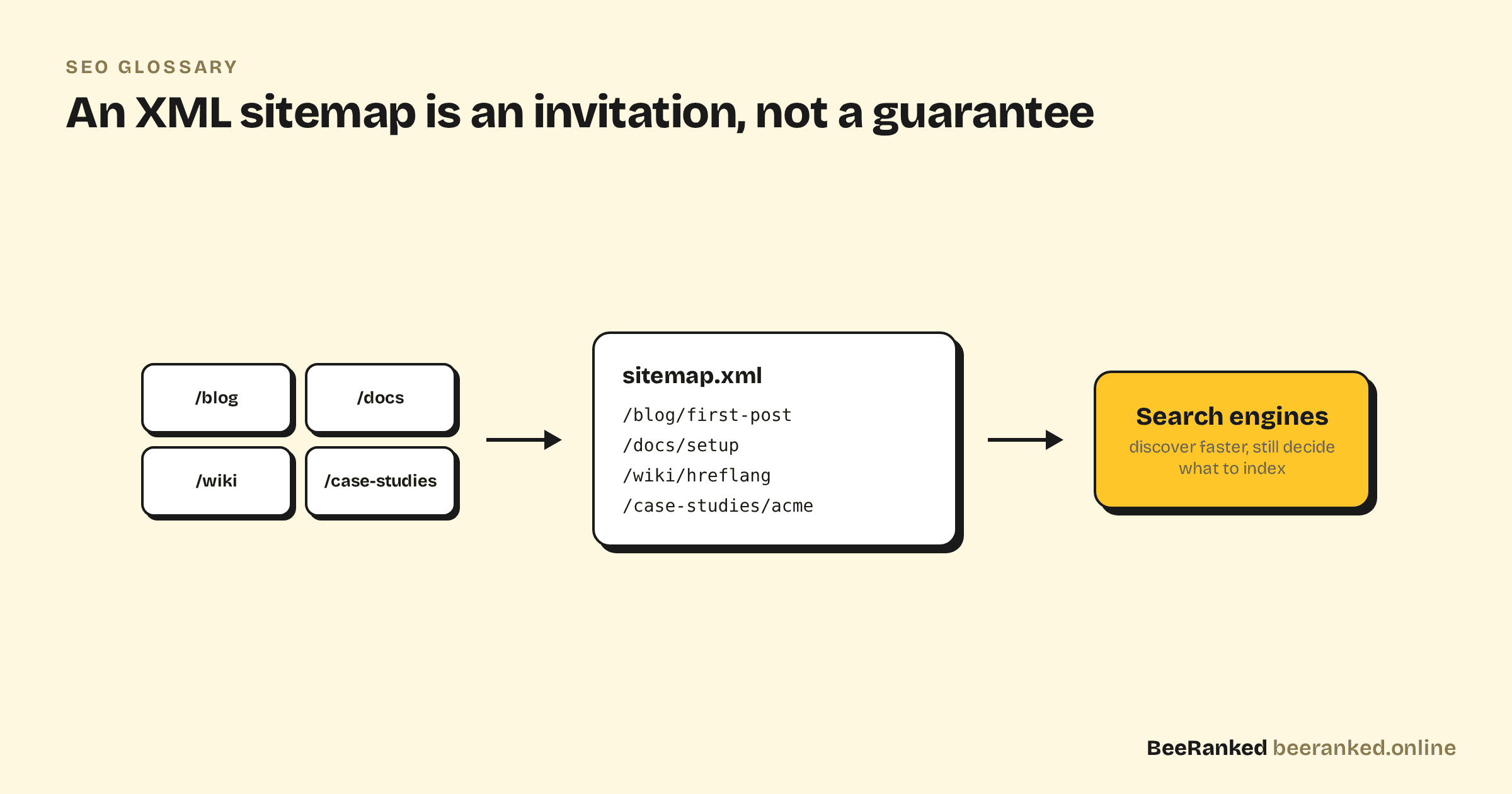
What a sitemap does and does not do
Google's documentation is precise about the limits: a sitemap "helps search engines discover URLs on your site, but it doesn't guarantee that all the items in your sitemap will be crawled and indexed". Indexing decisions still depend on the page itself.
Do you even need one? Google's guidance: if a site is small, roughly 500 pages or fewer, and properly linked internally, Google can usually find everything without it. Sitemaps matter most for large sites, new sites with few backlinks, and sites whose pages are not well connected, which is one more reason internal linking comes first.
What belongs in it
Only canonical, indexable URLs you actually want in search: no redirects, no noindexed pages, no duplicates. An accurate lastmod date is worth maintaining, it helps crawlers prioritize what changed. An inaccurate one teaches them to ignore your signals.
Sitemaps in BeeRanked
Every BeeRanked site generates its sitemap automatically: every published page, section index, and category archive, with lastmod taken from real content changes, updated on every publish. There is also a human-readable version at /sitemap. You never edit it, which is the correct amount of sitemap maintenance.