Content decay
By BeeRanked · August 17, 2026 · Updated September 12, 2026
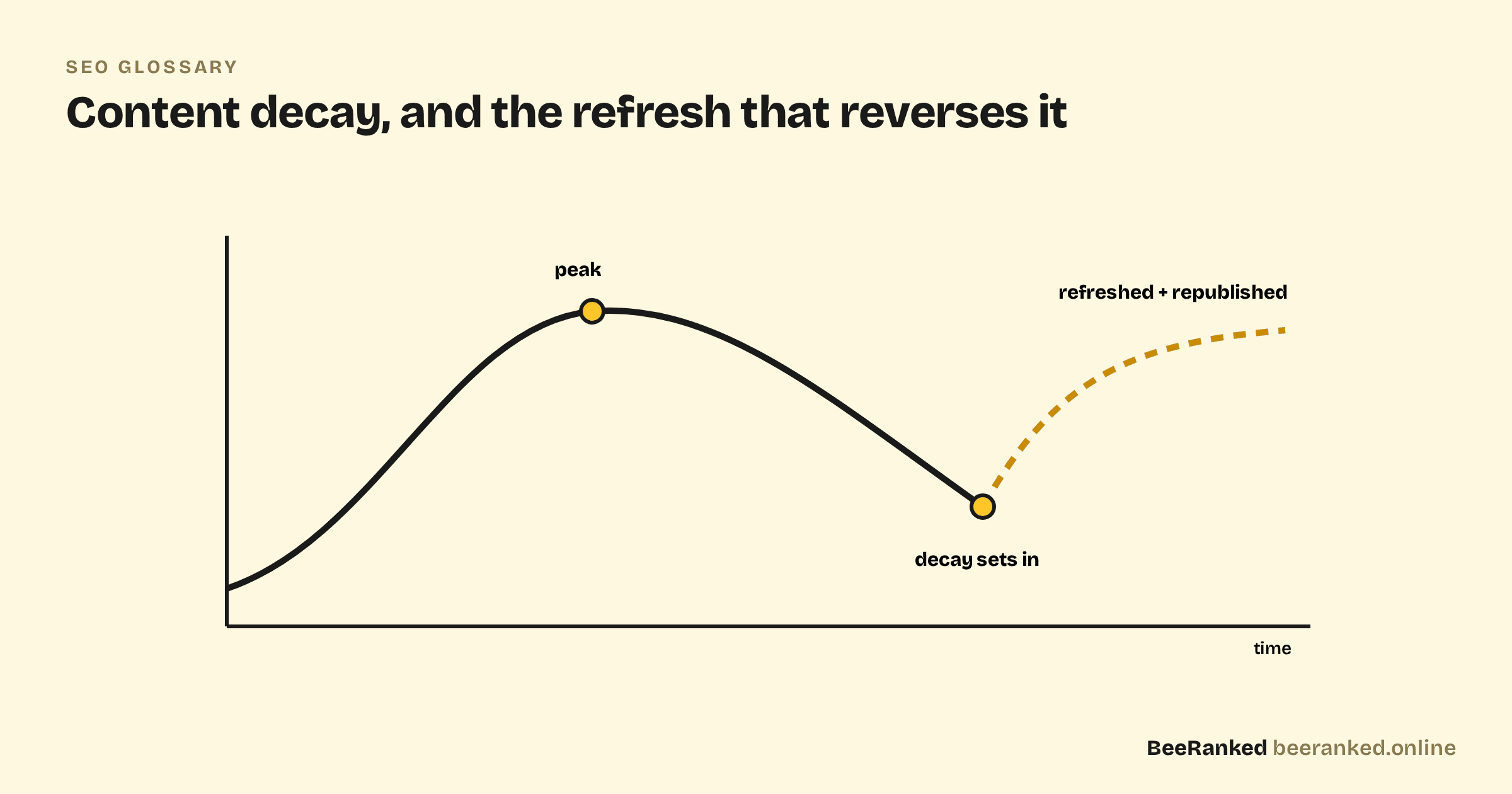
Content decay is the gradual loss of organic traffic and rankings that a published page suffers over time. A post climbs for months, peaks, and then slowly slides as its information ages, competitors publish fresher takes, and search intent shifts around it.
Why decay happens
Facts age. Screenshots stop matching the product, prices change, "in 2024" starts reading like a warning label.
Competition compounds. Every month, someone publishes a newer page targeting the same query, and newer pages get compared against yours.
Intent drifts. The same search words can start meaning something different, and your page answers the old question.
Decay is the normal trajectory of any page nobody maintains.
How to spot it
Sort your pages by organic traffic change over the last quarter, or watch impressions and average position in Search Console. A page that used to bring steady visits and has slid for two or three consecutive months is decaying.
Refresh instead of rewriting
Decayed pages have history and links working for them, which makes updating them one of the highest-leverage moves in SEO, often beating a brand-new post on the same topic. Verify the facts, replace stale examples and screenshots, tighten the intro, add what the topic grew to include, and republish. Keep the URL: its accumulated signals are the asset, and a changed URL needs a redirect to keep them.
We cover the full workflow in Content refresh beats publishing more. In BeeRanked, published dates and updated dates are tracked separately, so a refreshed page shows readers and search engines how current it is.