Structured data
By BeeRanked · August 6, 2026 · Updated September 24, 2026
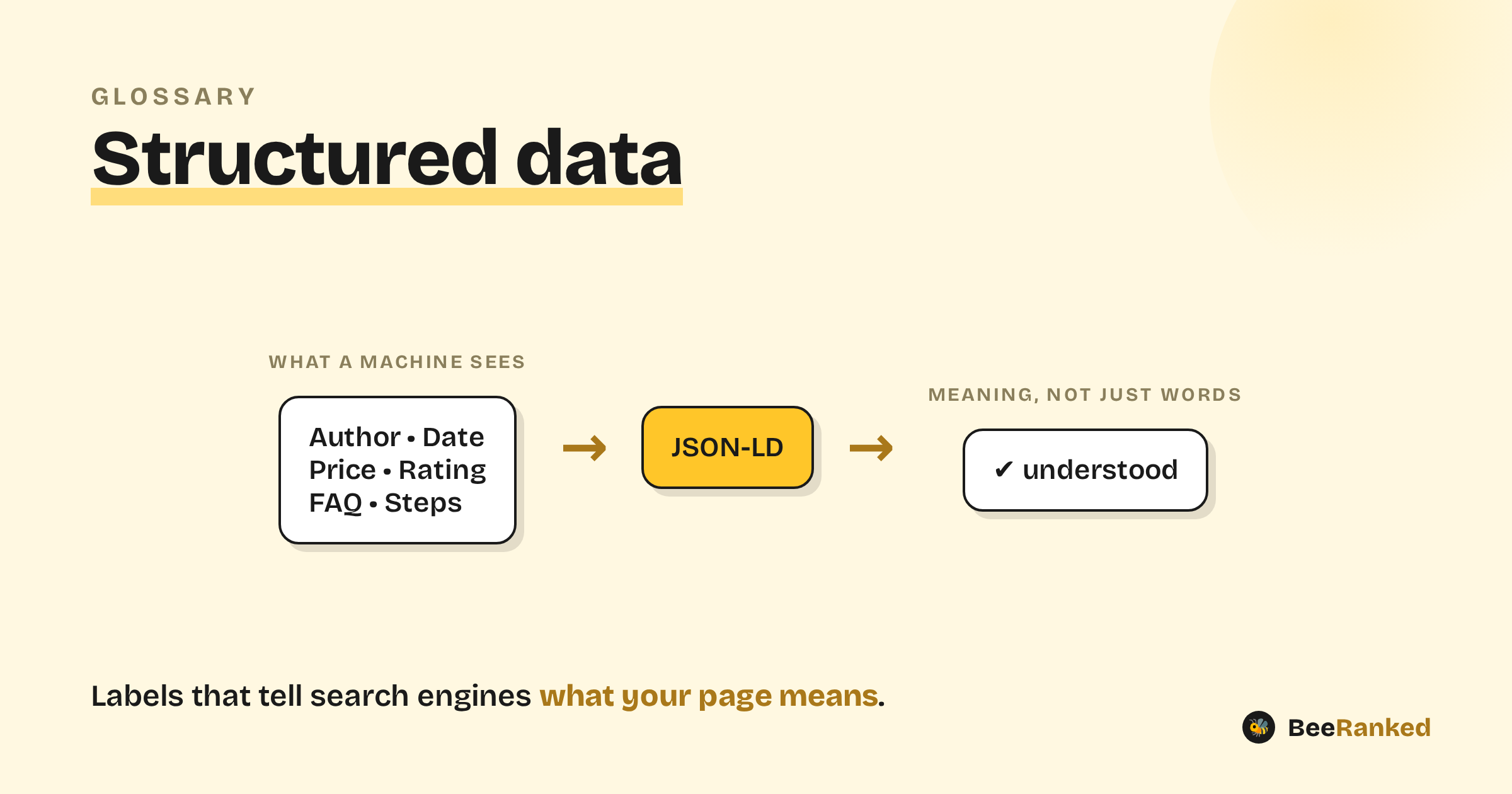
Structured data is a standardized format for labeling the information on a page so search engines and AI systems understand what it means, beyond the words it contains. On the web it usually means adding Schema.org vocabulary to your pages, most often as JSON-LD.
Why it matters
A machine reading raw HTML sees text. Structured data adds a layer that says "this is the author," "this is the price," "this is the publish date," "these are the steps in the recipe." That labeling is what lets Google show rich results (star ratings, prices, breadcrumbs) and what helps AI answer engines quote you accurately. It is the backbone of Answer Engine Optimization.
How it works
Vocabulary: Schema.org. A shared dictionary of types (
Article,Product,Organization,BreadcrumbList) and properties, maintained by Google, Microsoft, Yandex, and others.Format: JSON-LD. Google's recommended format is a small block of JSON placed in the page's HTML. It sits apart from your visible content, so it does not change how the page looks (Google: intro to structured data).
Validation. Test your markup with the Rich Results Test before you rely on it.
A common mistake
Marking up content that is not visible on the page, or describing something the page is not about, breaks Google's guidelines and can cost you eligibility for rich results. The structured data should always match what a reader sees.