SEO for SaaS startups: your first 90 days
By BeeRanked · July 8, 2026 · Updated September 12, 2026
Most SaaS SEO advice assumes you already have traffic to defend. If you are early, you do not, and that advice wastes months. This is the version for a SaaS starting near zero: what to do in the first ninety days, before a single ranking shows up.
You will not rank this quarter, and planning as if you will is the mistake. Get the technical basics in place fast and start publishing right away, lean into pages built for intent and for AI through the middle, then deepen into a cluster and measure the right signals. SEO is the channel that pays off later while other channels fund the present.
First, set the expectation
SEO compounds, and compounding is slow. A young domain typically waits two to four quarters before organic traffic becomes real. If your growth plan needs SEO to deliver pipeline this quarter, the plan is fragile. The goal for the first 90 days is the asset that produces traffic later, while outbound, communities, partnerships and launches carry near-term revenue. Everything below assumes that patience. That patience is about results. You start publishing in week one.
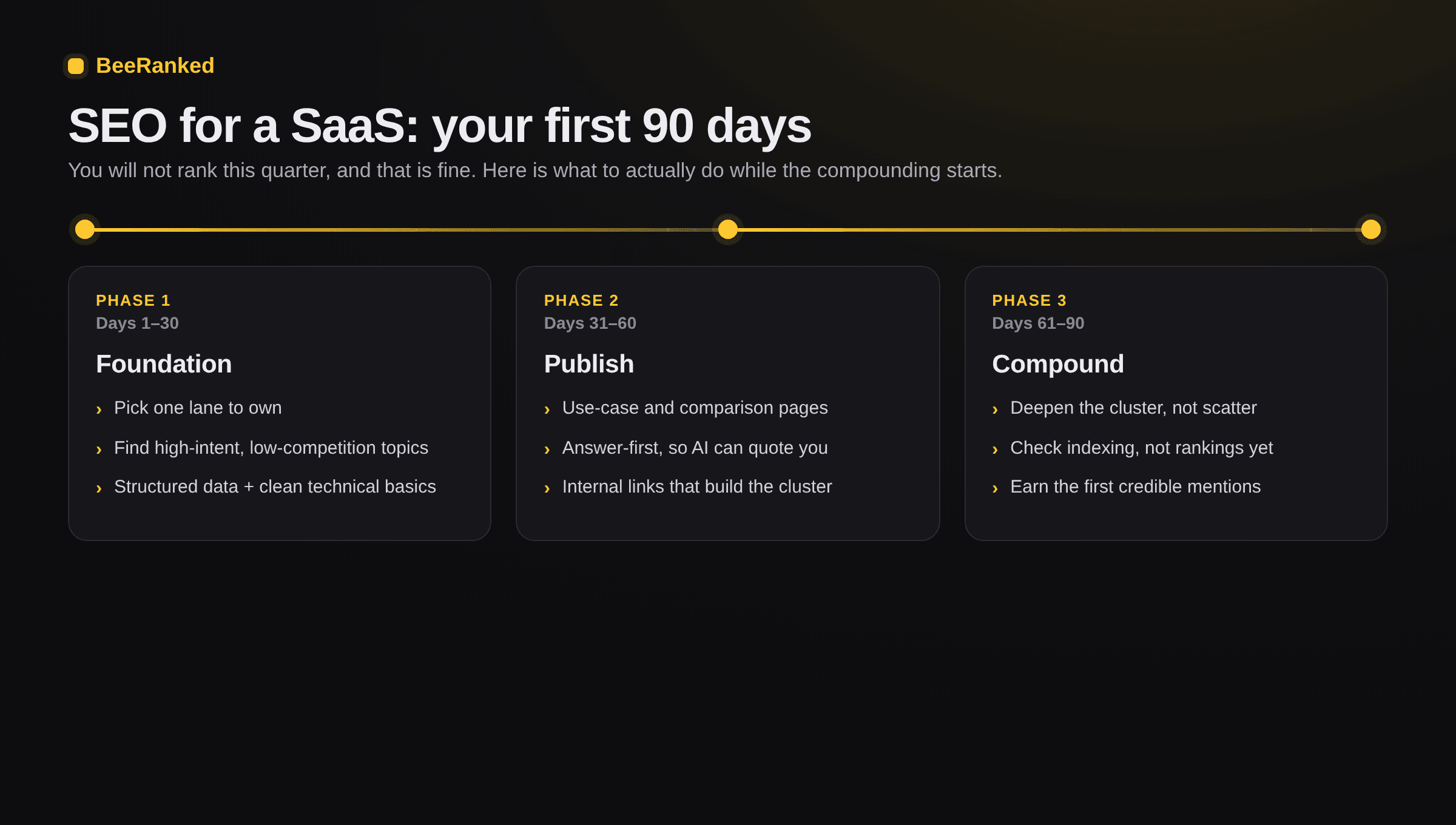
Days 1 to 30: foundation
This month leans on setup. It is still a publishing month: get the basics in place, then ship your first pages as soon as they are ready, often within the first week or two.
Pick one lane. Trying to rank for your whole category scatters your effort. Choose the single subject you most want to own and commit to it. Depth in one lane beats a thin spread across ten.
Find the right topics. Use customer problems and keyword research to find high-intent, low-competition queries, the ones with buyers behind them and weak pages currently ranking. This is its own skill; see how to find topics worth ranking for.
Get the technical basics right. A crawlable site, clean titles and descriptions, and valid structured data so Google and AI can understand your brand. For a new, unknown brand, that machine-legibility is one of the few early levers you have.
The moment a page is crawlable and you have chosen your first topics, publish. Foundation and publishing overlap; the phases in this plan mark where your emphasis shifts. A page live in week two has weeks longer to get indexed than one you held back for a tidier launch.
Days 31 to 60: publish
This is where publishing becomes the main work, and where you lean into the page types that convert for SaaS.
Use-case and comparison pages. One page per job your product does, plus fair "X vs Y" and "alternatives to Z" pages that catch buyers at the decision. These match high-intent searches and speak to someone close to buying, unlike generic listicles.
Answer-first. State the answer to each question up front, in a passage a machine can lift, then expand. Your buyers increasingly ask AI tools before they reach a results page, and answer-first pages are the ones that get cited. For a young site this is leverage, because incumbents are slow to restructure.
Link as you go. Point each new page to the related ones with internal links. Each post is one node of a cluster.
Days 61 to 90: compound
Momentum comes from depth.
Deepen the lane. Add the pages that complete your one lane into topical authority before you open a new subject. A coherent cluster shows Google you are a credible source.
Measure the right signal. With little traffic, rankings and clicks are too noisy to read. Watch leading indicators instead: are your pages getting indexed, are they starting to appear for the specific queries you targeted. Those show up before traffic does. Google's own SEO starter guide is the baseline checklist worth revisiting here.
Earn your first mentions. Entity recognition and authority come partly from other credible sites referencing you. Start the slow work of getting mentioned; it is what lets you rank for the competitive terms later.
Keep it on your own domain
One structural choice underpins all of this: publish on your own domain, where the authority you build stays yours. A third-party platform keeps it. Everything you write in these 90 days should compound in one place, under your brand, so the site you already have keeps the traffic you earn.
Where BeeRanked fits
This 90-day plan is a lot to wire by hand: structured data, answer-first formatting, internal links that maintain themselves, a cluster that stays coherent. BeeRanked makes those the default, so your ninety days go into judgment and substance, the topic choices and the comparisons only you can write, instead of plumbing. See how we approach SEO, or publish your first page to start the clock.
Ninety days builds the thing that ranks. Start narrow, publish early, deepen into a cluster, and measure what moves first. The startup that does this becomes the obvious answer in its niche a year from now, while the one waiting for a rebuild is still waiting.
Frequently asked questions
How long until SEO brings a SaaS real traffic?
Usually two to four quarters for a young domain, sometimes longer in competitive niches. SEO compounds slowly, so treat it as an investment that pays off later, and fund this quarter's pipeline with faster channels while the content asset builds.
What content should a SaaS startup write first?
Use-case pages, fair comparison and "alternatives" pages, and integration pages, the ones that match high-intent, close-to-buying searches. Skip generic "top 10 tips" filler; it has no intent behind it and does not convert.
Should I wait until my site is "SEO-ready" to publish?
No. Get the crawlable basics right up front, then publish, often within the first week or two. Consistent publishing on a technically sound site beats a perfect relaunch that never ships. The fastest SEO win is the useful page you put up this week.