hreflang
By BeeRanked · August 6, 2026
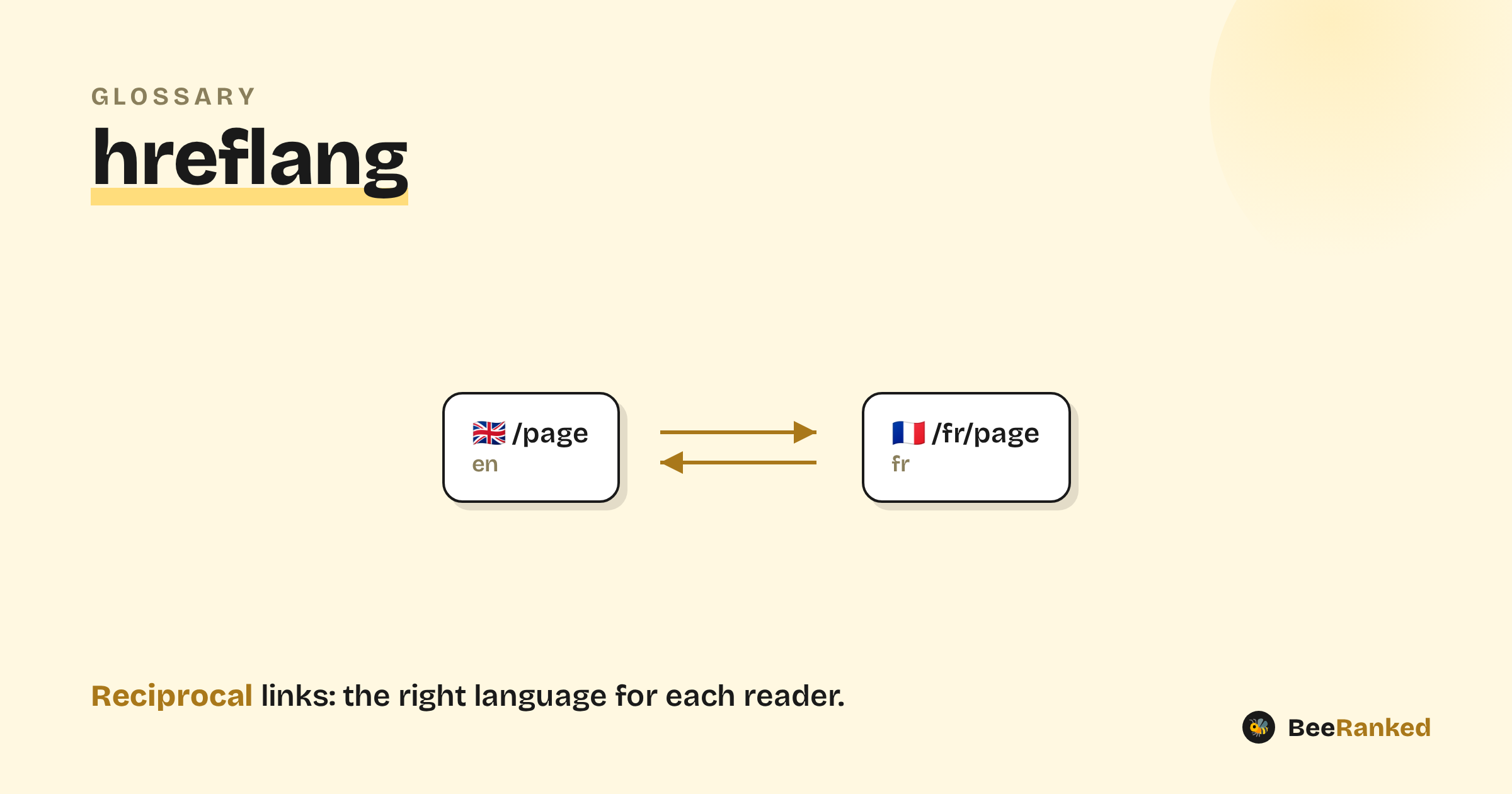
hreflang is an HTML attribute (with sitemap and HTTP-header equivalents) that tells search engines which language and region a page is meant for, so they can show the right version to the right user. It is written as a set of link tags, one per language variant, that all point to each other (Google Search Central).
Why it matters
If you publish the same content in several languages, hreflang stops the versions from competing with each other in search and prevents a French reader from landing on the English page. Without it, Google guesses, and it often guesses wrong.
How it works
Each page lists every language version, including itself (self-referencing).
Values are a language code (
en), optionally with a region (en-gb), plus an optionalx-defaultfallback.The set must be reciprocal: if page A points to page B, page B must point back, or Google ignores the annotation.
A common mistake
Non-reciprocal or partial annotations are the most frequent hreflang error. A single missing return link can invalidate the whole cluster.