Long-tail keyword
By BeeRanked · October 5, 2026
A long-tail keyword is a specific search of several words that few people make each month, such as "anchor text for internal links" instead of "links". The name comes from the shape of a chart of search demand: a small number of very popular searches at the head, and a long tail of rare, specific ones.
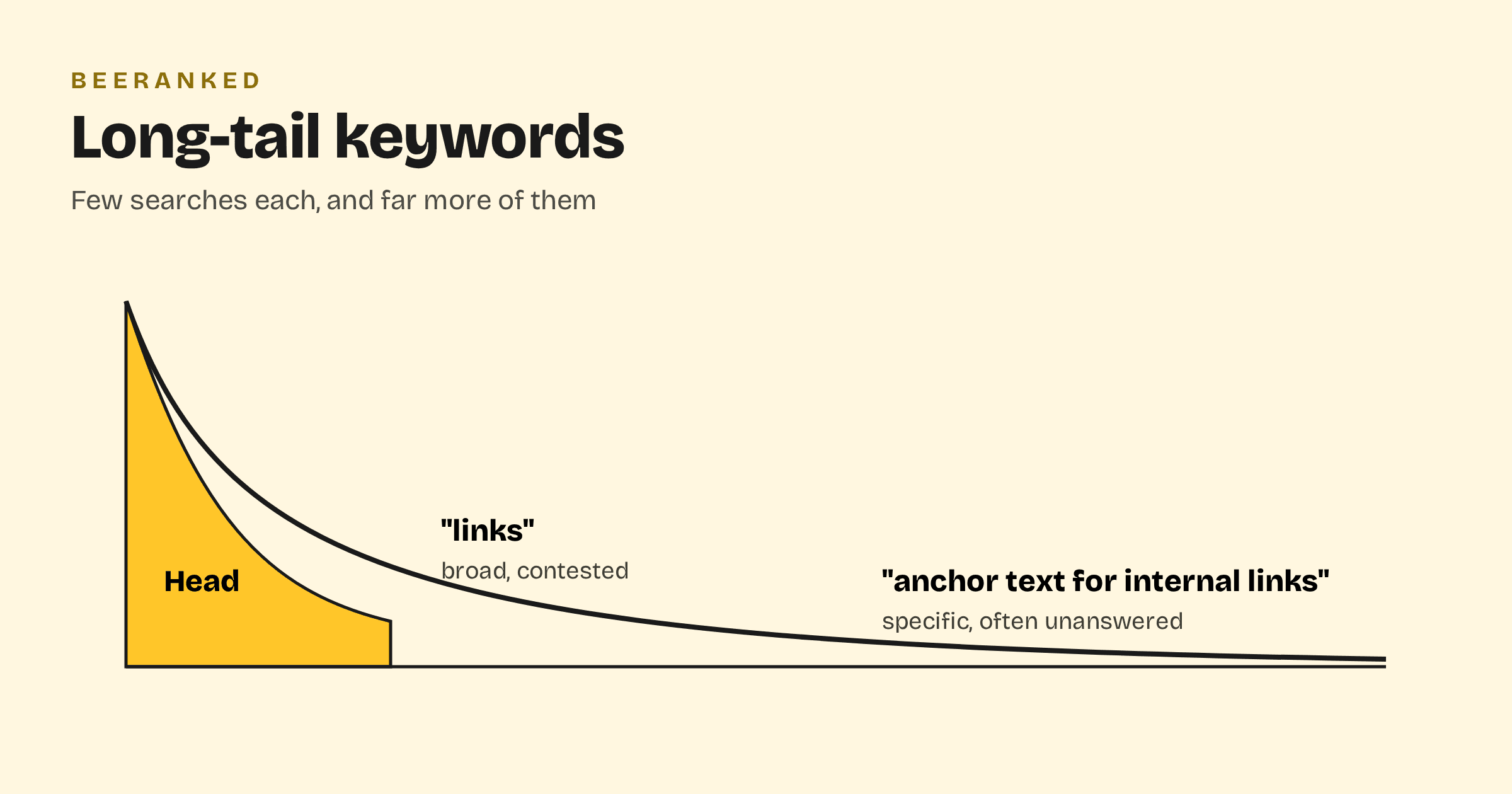
Why they matter
A specific search says more about what the person wants. Someone who types "meta description examples for a product page" is close to doing the task, and a page that matches gets a reader who stays. Broad terms are also contested by large, established sites, while specific ones often have no good answer yet. On beeranked.online, the search that brought the most impressions in our first three months was eleven words long.
Google does not ask you to list every variation
Google's SEO starter guide does not use the term. Its advice is to think about the different words different readers would use: "Users who know a lot about the topic might use different keywords in their search queries than someone who is new to the topic" (Google Search Central). It adds that you need not anticipate every variation, because its "language matching systems are sophisticated and can understand how your page relates to many queries, even if you don't explicitly use the exact terms in them."
One page per variation is therefore the wrong plan. Near-identical pages compete with each other, a problem described under keyword cannibalization. Write one page per question, and let it rank for the variations.
Where to find them
Your own Search Console data is the best source. The Queries table lists the exact searches your pages appeared for, including long ones you would never have guessed; How to read Google Search Console shows where to look. Questions from customers, the "People also ask" box and the autocomplete suggestions under the search bar are the other free sources. How to find topics worth ranking for turns the list into a plan.
Long-tail keywords in BeeRanked
The Data page lists the searches each of your pages appears for, with impressions and position, so a specific query that has no dedicated page yet is easy to spot. Grouping those pages into a topic cluster is how they add up to topical authority.