How to check whether AI search engines mention your brand
By BeeRanked · July 2, 2026 · Updated September 24, 2026
Search does not end at Google's blue links. Some of your buyers ask ChatGPT, Perplexity, Gemini or Google's AI Overviews before they click a website. Those tools answer in prose, and in that answer your brand is either named or it is not.
The dashboards are thin. Google folds AI Overviews and AI Mode into Search Console's ordinary Web report, so you cannot tell an AI citation from a classic click. Bing Webmaster Tools has shown AI citations since February 2026. ChatGPT and Perplexity report nothing to publishers. You can still see inside the answers, first for free, then with tools if you want scale.
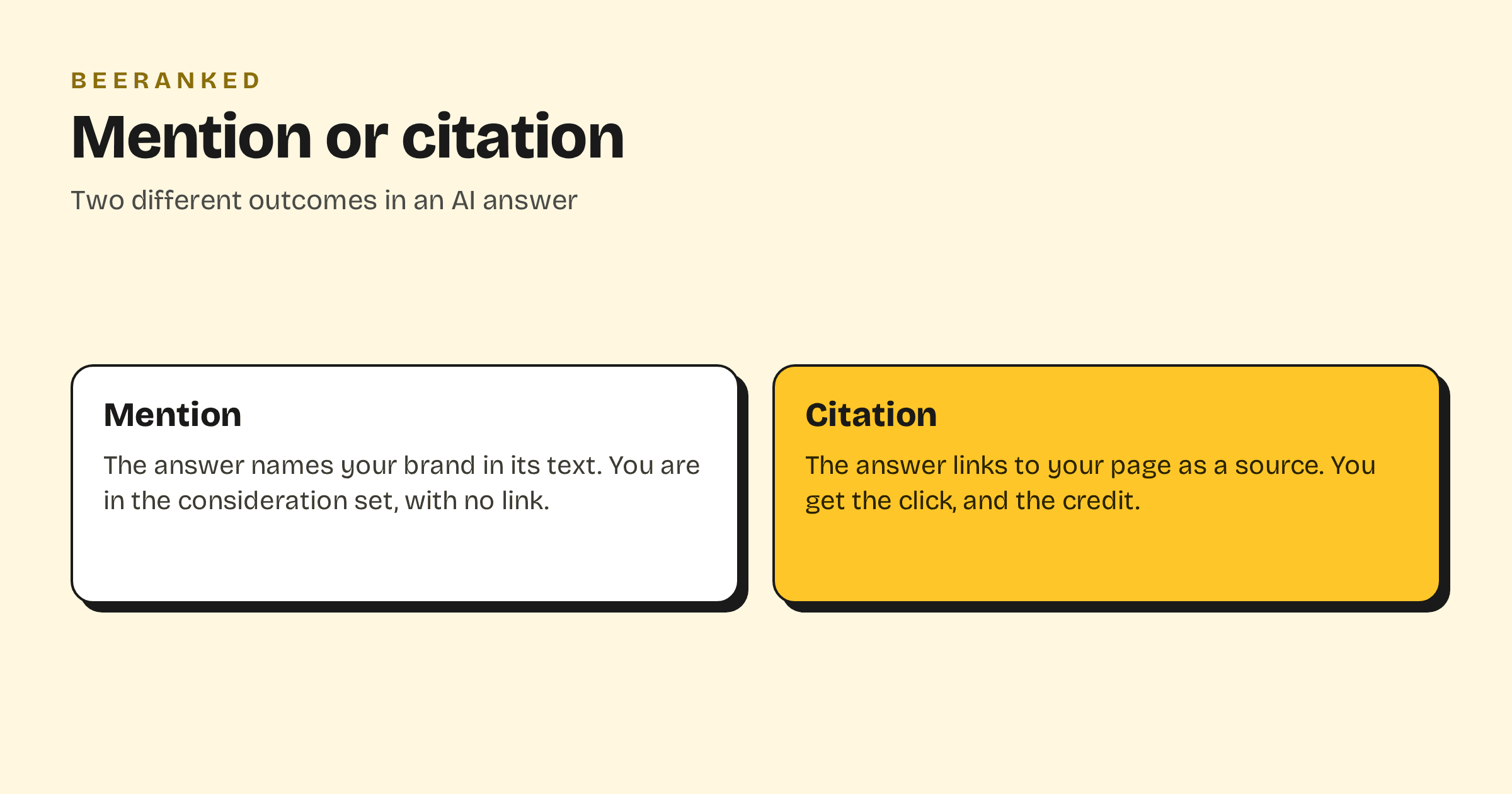
Mentions and citations
Two different things can happen in an AI answer.
A mention is when the engine names your brand in its text: "tools like Ahrefs, Semrush, and BeeRanked." You are in the consideration set.
A citation is when the engine links to a page on your site as the source for part of its answer. You are the authority it leaned on.
Mentions build familiarity. Citations send clicks and carry trust. Track both, because you can earn one without the other.
The free method you can run this afternoon
You do not need to buy anything to get a first read.
Write a prompt list. Collect 20 to 30 questions a real buyer would ask, in their words. "Best way to add a blog to my website," not "content management platform." Include a few where you would expect to appear and a few head-to-head ones ("X vs Y").
Run each prompt 3 to 5 times across the engines that matter to you: ChatGPT, Perplexity, Gemini, and Google's AI Overviews. Answers vary between runs, so repeats matter.
Record four things each time: did it name you, roughly where in the answer, which competitors it named, and which sources it cited.
Compute a visibility rate: the share of runs that mention you. "We appear in 40% of runs for our core topics" is a number you can track over time. Raw position matters far less here than presence.
Score each engine separately. You can be strong in Perplexity and invisible in ChatGPT, because each pulls from different data and weights different signals. Twenty-five prompts run five times is 125 data points, enough to spot the obvious patterns in an afternoon.
The one free dashboard
Bing Webmaster Tools added an AI Performance report on 10 February 2026. Bing describes it as showing "how often your content is cited in generative answers, with clear visibility into which URLs are referenced and how citation activity changes over time", across "Microsoft Copilot, AI-generated summaries in Bing, and select partner integrations". It is free with a verified site, and it matters beyond Bing: OpenAI's help centre says ChatGPT search "sometimes partners with other search providers", and the provider it links to is Microsoft. Add the report to the afternoon above; it is the only citation count a vendor gives you today.
When to automate
The manual method works, but it does not scale, and it cannot watch for changes while you sleep. Once you want steady numbers and alerts when a model update shifts your standing, a purpose-built AI visibility tracker earns its keep. Options in this space include Semrush's AI toolkit, Ahrefs Brand Radar, Profound, Peec, Otterly and Scrunch; AEO tools in 2026, including the free ones lists what each one costs and does, as of September 2026. Run your priority prompts weekly and a fuller audit monthly, since model refreshes and index updates move results more often than classic rankings do.
What earns the mention
Monitoring tells you where you stand. Earning the mention is the work, and there is no secret handshake. Google is explicit that there are "no additional requirements to appear in AI Overviews or AI Mode, nor other special optimizations necessary" beyond the fundamentals: helpful, people-first content, sound technical setup, and a good page experience (Google Search Central). AI answers are built on the same open web the crawlers already read.
In practice, being named comes down to a few compounding habits:
Answer the question directly, near the top, in plain language an engine can lift and quote. This is the heart of answer engine optimization.
Make your brand legible to machines with clean, structured facts about who you are and what you do. See how Google and AI search understand your brand and the role of schema markup.
Build topical depth so you are the obvious source on your subject. That is what topic clusters and pillar pages are for.
Get named off your own site too. AI engines read the whole web, so mentions on other reputable sites feed back into whether you show up in the answer.
Start with one number
You do not need a program on day one. Pick your ten most important prompts, run them across two engines this week, and write down your visibility rate. That single number, tracked month over month, turns AI search from a black box into something you can manage and improve.