Content hub
By BeeRanked · August 27, 2026 · Updated September 12, 2026
A content hub is a section of a website that gathers everything the site offers on one topic: a central hub page that introduces and organizes the subject, linked tightly to the articles, guides, and definitions that cover its details.
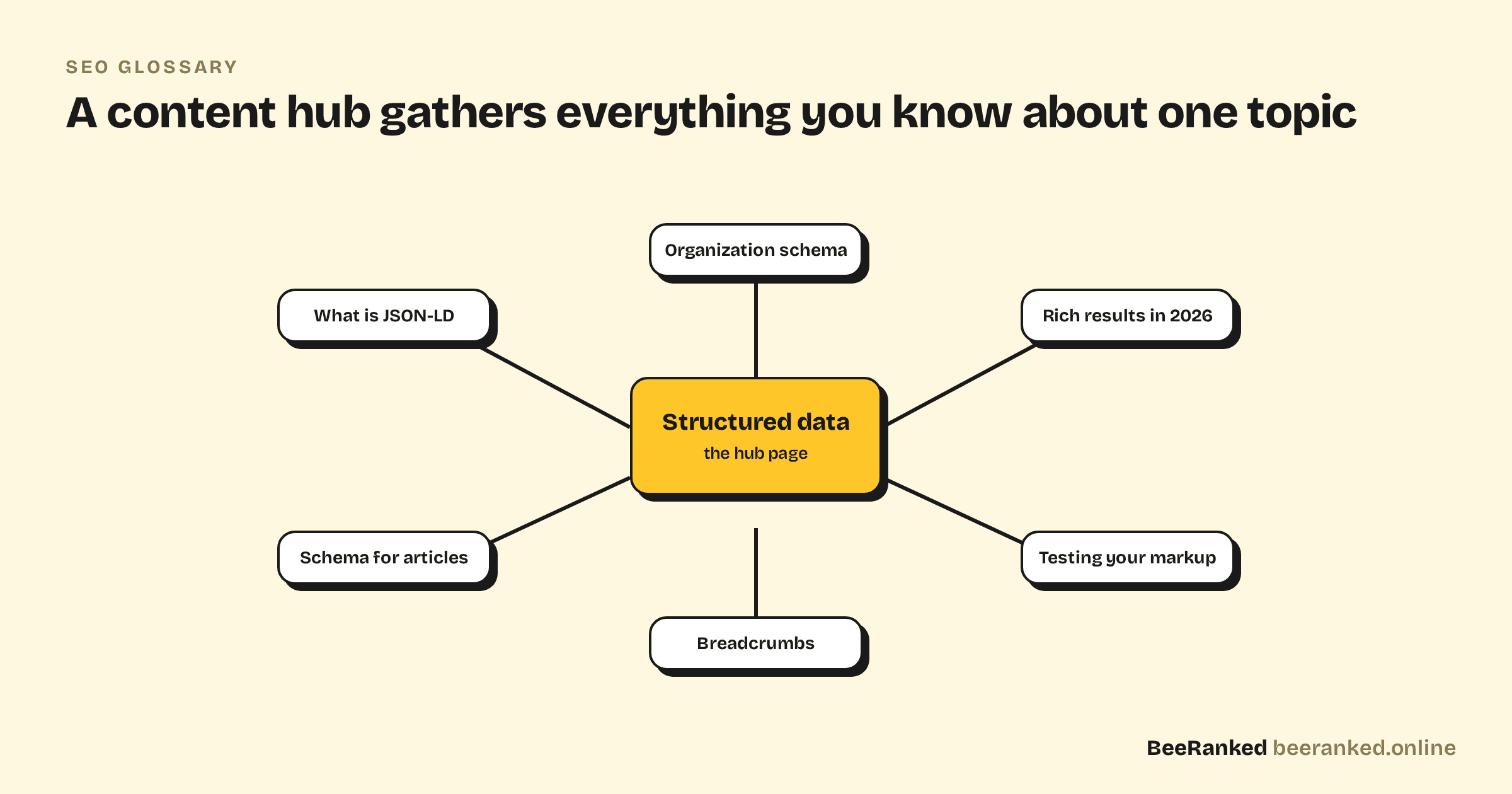
How a hub works
The structure is hub-and-spoke. The hub page targets the broad topic ("structured data") and links out to focused pages targeting its narrower questions ("Organization schema", "testing your markup"). Every spoke links back to the hub and sideways to its siblings. The result is a dense cluster of internal links with descriptive anchors, which does three jobs at once: readers can navigate the whole topic, crawlers can find every page, and search engines accumulate evidence that this site covers the subject thoroughly.
A content hub is the same underlying idea as a topic cluster with a pillar page. "Hub" tends to describe the visible section readers browse; "cluster" describes the linking strategy underneath. Build one and you get the other.
What makes a hub work
A hub page that is useful on its own: an overview with a map of the topic.
Spokes that each answer one question well, so every page has a query it deserves to win.
Consistent linking, both directions, added when pages are created.
A maintained scope: when the topic grows a new question, the hub grows a new spoke.
Hubs in BeeRanked
BeeRanked sites are built hub-first: your homepage is a hub of your content sections, categories create per-topic archive pages automatically, and related-content links between sibling pages come free. The glossary this page lives in is itself a hub, which is our own use of the pattern.